Ayurveda Self-Care has changed me. Bringing a much greater awareness of how disordered eating has a negative impact on the quality of life. Much has already been said about anorexic ballet dancers, but that doesn’t mean the problem has gone away. Young girls within today’s culture experience crushing pressure to be thin and attractive. Eating disorders, including anorexia nervosa, bulimia nervosa, binge eating disorder and EDNOS (Eating Disorder Not Otherwise Specified) can all have life-threatening consequences.

Dance is a highly competitive, high-pressure and physically demanding profession. I have been dancing since I was three years old, competed throughout childhood, selected for apprenticeships to Russian Ballet Companies and American Ballet Companies such as the New York City Ballet. NYCB presented a full-time contract when I turned 14 which is traditionally a difficult time when young dancers make the jump into a major company and go Pro.

You can imagine what the mantra or programming that was signaled every day to a professional ballerina. “Do Not Eat” This became engrained in my nervous system and learned to have a sense of control over my body and the competition which is thought powerful for ballerinas. The same discipline that a ballerina uses to master a skill after hours of practice is the same force of will she uses to deny herself food.
Eating disorders range from anorexia nervosa (deliberate self-starvation) and bulimia (recurring binge eating and purging) to disordered eating, and ritualistic compulsive eating problems. Within the demanding whirl of being a teenage professional dancer, developed an unhealthy relationship with food. I had lost any sense of a center for self-esteem and self-worth. I either was relying on my own perfectionist idea, or was basing it on the ballet world’s idea of success, which I wasn’t living up to because being skinny meant being worthy.

Since I wasn’t allowed to eat the development of discovering Ayurveda and how to eat healthy and enjoy the process was later on in my life. Ayurveda has brought in a new perspective about my relationship to food. Ayurveda understands all eating disorders are defined by having an unwholesome relationship with food to the point of negatively affecting one’s health. Ayurveda (India’s traditional and ancient system of health) has a unique perspective about eating disorders and may offer some insight to the individuals out there affected by them. Establishing more awareness about my inherent body constitution, satiating the absence of the feeling of love for oneself with food, or reinforcing the feeling of lack of self-love with food, are the underlying emotional reasons why a person develops this specific disorder. Ayurveda suggests that lack of self-love is the root cause for all types of eating disorders. During the course of Ayurveda Self Care Class I realized to add an exercise called Reverse Adi Shakti Kriya also known as Meditation for Creating Self-Love. Here you are mentally and hypnotically blessing yourself. This self-blessing is to affect and correct the magnetic field, you discover how strong you are, when you discover how strong you are, you can find the strength to overcome your personal demons.
Meditation for Self-Love
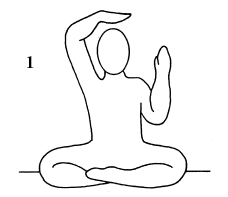
Sit in Lotus Pose with a straight spine. The right palm faces down, blessing you. This self-blessing corrects the aura. The left palm faces forward and blesses the planet.
The eyes are closed and focus at the lunar center (middle of the chin.)
Breathe long, slow, and deep with a feeling of self-affection. Try to bring the breath to one breath per minute: Inhale for 20 seconds, hold for 20 seconds, exhale for 20 seconds and repeat 3-11 minutes.
The Ayurveda system of medicine, nutrition and self-care creates a perfect alliance with holistic treatment, recovery, and healing from eating disorders and disordered eating. Ayurveda combines the Sanskrit words ‘avur’ which means life and ‘veda’ which means knowledge. As we recover from an eating disorder some of the most powerful results are the deep knowing of the self that allows for a more meaningful life.
Sat Nam -8/18/16-Kelly Krishna Dunn






 Intuitive Magazine