Festival Of Love

Holi is a Hindu spring festival celebrated in India and Nepal, also known as the “festival of colours” or the “festival of love.” 

The festival signifies the victory of light over darkness, the arrival of spring, end of winter, and for many a festive day to meet others, play and laugh, forget and forgive, and repair broken relationships. It is celebrated as Rangwali Holi – a free-for-all carnival of colours, where people smear each other with colours and groups carry drums and other musical instruments, go from place to place, sing and dance. People visit family and friends to throw coloured powders on each other, laugh and then share Holi delicacies, food and drinks. 

There is a symbolic legend to explain why Holi is celebrated as a festival of colours in the honor of Hindu god Vishnu. In the Braj region of India, where the Hindu deity Krishna grew up, the festival is celebrated in commemoration of the divine love of Radha for Krishna. 

Passions and Perspective 

Follow your passions. Whether it is dancing, writing, hiking or surfing, when you are enjoying yourself you move into alignment with your soul. 

Have you ever noticed that inspiration and fresh perspective come to you when you are relaxed and having fun? Remember, you don’t have to work at intuition. 

Life is about enjoying yourself, and when you remember to play you remember your spirit and why you are here. You say an inner Yes to yourself, and to Life as well!

Butterfly Pea Flowers 

Edible petals, Butterfly Pea Flowers has been used as a “smart drug”  to enhance memory, cognition and intelligence. Butterfly Pea Flower has long been recognized in Ayurveda and other forms of traditional medicine for its medicinal purposes. Tinctures made are beneficial for skincare, haircare, bodycare, and beautycare. 

Butterfly pea buds themselves have a subdued flavor similar to a slightly more herbal black tea, but the plant primarily functions as a natural dye that’s subtle in flavor but bold in visual color and attraction. 

The flowers are most famously used to make a traditional Thai welcome tea known as dok anchan, which is served  frequently to travelers upon  arrival. And after centuries of use in Southeast Asia for health purposes like strengthening hair follicles and helping fight depression, butterfly pea tea and its concentrate found themselves in blue beverages, butterfly pea concentrate became a darling of the cocktail world. The tincture allows bartenders to craft drinks with a cool- sunset-style color spectrum and chefs to decorate dishes with elegance. 

Say Yes To Life!

When the mind is full, it is harder to receive the insights of your intuition. Attachments to people, plans and agendas, combined with the fear of the unknown and the need for familiarity, all present obstacles to opening to the new and unexpected.

 Your job is to create space for your intuition by clearing away the clutter of your mind and the distractions of your life.

Life is about enjoying yourself, and when you remember your spirit and why you are here you say Yes to yourself, and to Life as well!

Yoga Shala West

The spirit of Yoga Shala West shares a deep love for ashtanga yoga. Every morning becomes magical stepping into this sacred sanctuary which holds an omnipotent space quite strongly. With gratitude, to the founder of Yoga Shala West, Pranidhi Varshney for opening mysore-style shala in the heart of West Los Angeles. Doors open before sunrise for early morning mysore risers. It feels special to connect to our divine aspect, opening the mind to gain clarity, connection, and compassion in our relationship with our self and the world.

This hidden gem offers morning, afternoon and weekend mysore. The traditional practice that cultivates the mysterious healing power of synchronizing breath with movement. In addition to mysore, the studio also has intriguing events, sound healing baths, led classes, guest teachers, mantra, singing, and harmonium that accompanies many classes. Pranidhi teaches morning mysore, and on Fridays’ devotional music is played, a personal favorite honoring spiritual traditional music like contemporary Indian, Sufi, devotional chanting, vedic chanting all with an omniscient experience of isvarapranidhana. Devotion to the Divine. This devotion means a surrender of all thoughts to the Divine, a merging with the Divine being able to completely surrender our individual ego identities to our own higher self. This unique method of yoga practice allows everyone with varying physical abilities to create a sacred space together.

This five-star community ashtanga yoga shala is highly recommended. Afternoon mysore is rare to find in any city and Nina Collins who loves teaching and sharing the mysore tradition method with her students, has an afternoon mysore program. Her love for teaching shows and she brings a sense of inspiration, focus, and commitment to the practice. This is indeed a fine way to live an authentic compassionate life.
“Practice and all is coming.” Sri Krishna Pattabhi Jois

For more information or if you happen to be in West LA and want to check it out visit  yogashalawest.com

By Kelly Krishna Dunn

The Courage To Trust Your Intuition 

Honoring your intuition, honoring your true Self, takes great courage. It may not be easy in the short term to act on your intuition, but it can be a big price to pay by not listening to it. 

Trust that nothing is revealed to you intuitively if it is not in your highest interest. Your intuition guides you, it is in service for your well-being.

As much as it takes courage to take action on your intuition, it can take courage to be honest with yourself and your situations. Acknowledging your intuition is about being real with yourself and what is true for you. 

It can be uncomfortable to be honest because of fears of loss, change and hurting others. But to deny your true Self is the biggest  denial of all. Therefore shine bright like a diamond and trust that your intuition is there to serve you. 

Try asking yourself “What is my intuition saying?” “What does my heart want?” Asking yourself questions opens you to your heart where your intuition lives. 

Breathe Deep 

Part of slowing down is simply taking a few deep breaths. No matter where you are, you always have time to do this. Just one long, slow deep breath serves to relax and connect us to our body where our intuition speaks to us. 

Next time you have an important decision to make, stop and take a few deep breaths beforehand and see how this changes things.

Which Aromas are Best For Kapha? 

Kaphas are calm, consistent, steady, and reliable when their dosha is balanced, but as soon as they fall off balance, Kaphas can have a hard time motivating themselves. 

Aromatherapy can be an effective form of natural medicine and one way Kaphas can reinvigorate their dosha and get back on track.  


For someone whose primary dosha is Kapha, warm, spicy, and stimulating aromas are generally the most balancing. Suggested aromas.. 

Camphor

Juniper

Eucalyptus

Marjoram

Clove

Ayurveda and Aromatherapy 

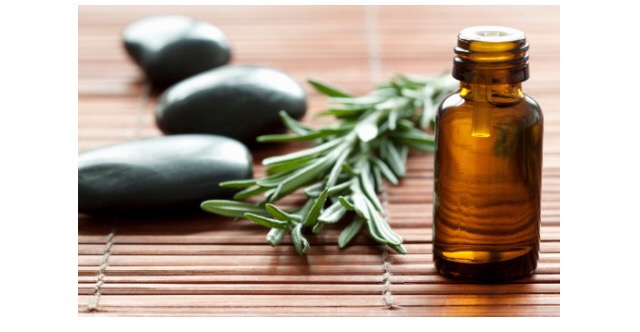
In Ayurveda aroma or essential oils collected from the plant are considered their life force or soul. 

The innate intelligence of the plant captured in essential oil can awaken our body, mind and senses. From an Ayurvedic perspective the ‘aroma’ is the life force or #prana, uplifting quality of the oils increases our Ojas (immunity) and the response of the body or the interaction of the body with the oil can improve Tejas (radiance and glow). 


Ayurvedic practitioners use essential oils, incense, and floral water to uplift the mood, calm and relax the nervous system, relieve imbalances of the doshas and improve cognitive and other physiological as well as psychological functions of the body.

Ayurveda also indicates to be mindful about the seasonal changes when using essential oils. In winter strong, spicy and hot oils such as eucalyptus, thyme or camphor can be used. The essential oils potentially are antibacterial, antifungal and antiviral. They also have the ability to alter body chemistry and therapeutic responses.